Aortic root replacement with a stentless xenograft (Freestyle®) in Iceland – indications and outcome

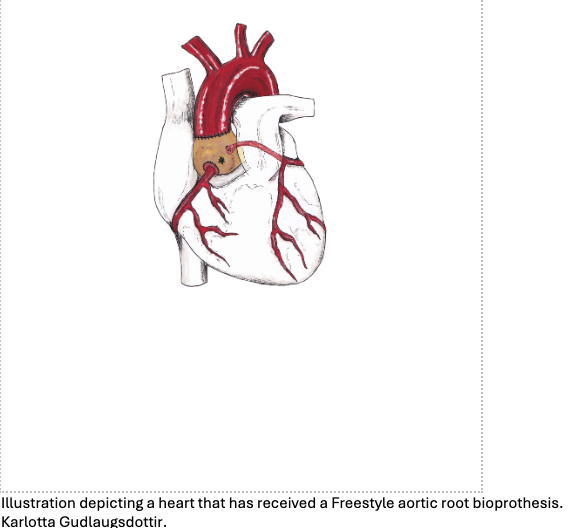
Introduction: Aortic root replacement (ARR) can be performed with a stentless porcine xenograft (Freestyle®) as an alternative to the conventional Bentall-procedure, where mechanical or stented bioprosthetic are sewn into a wov-en tube-graft. We examined early and late outcomes of Freestyle®-ARR in a whole-nation cohort, focusing on indications and surgical outcomes.
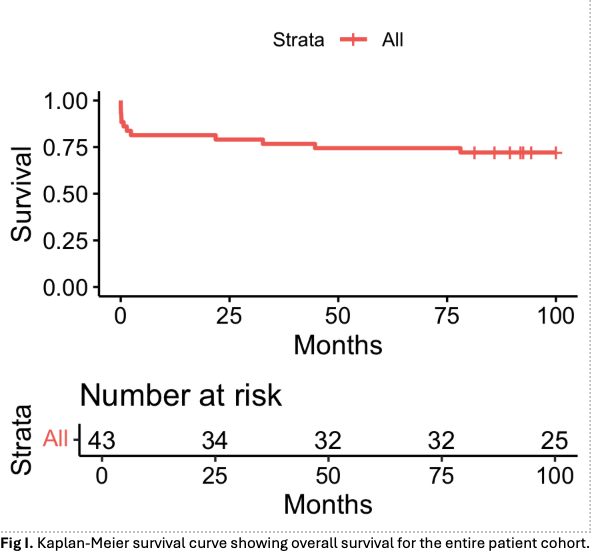
Materials and methods: A retrospective analysis that included 44 consecutive Freestyle®-ARR performed at Landspitali 2002-2018. Primary outcomes were 30-day and long-term survival (Kaplan-Meier), with a median follow-up of 111 months. Secondary outcomes included early postoperative complications and late reoperations.
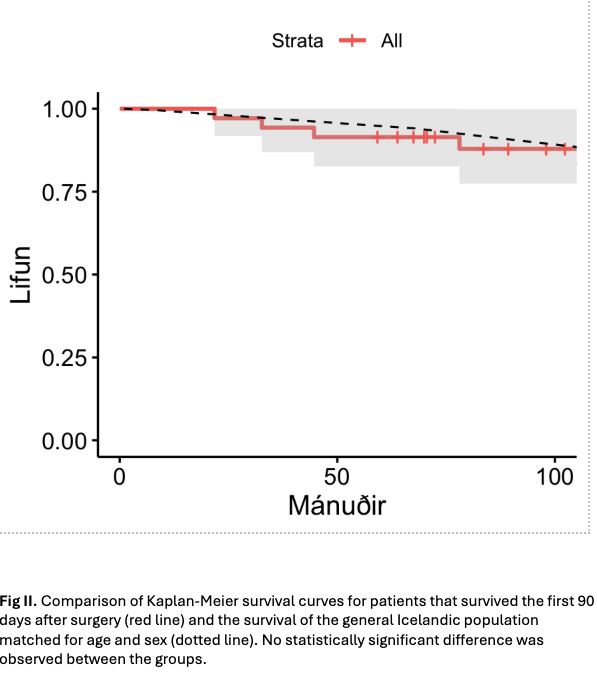
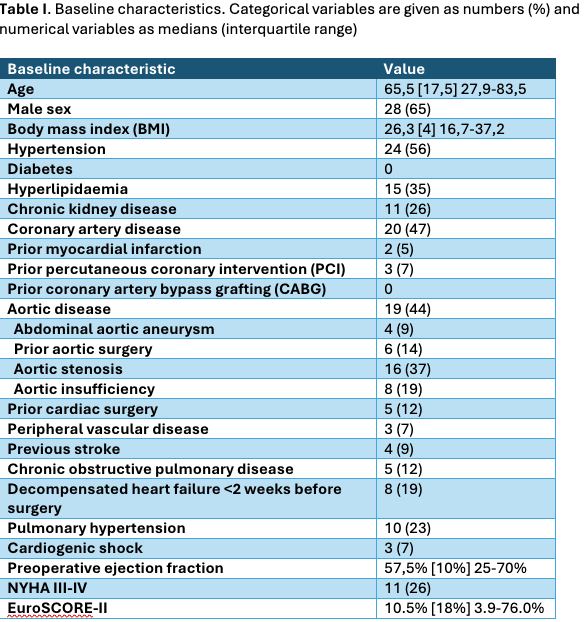
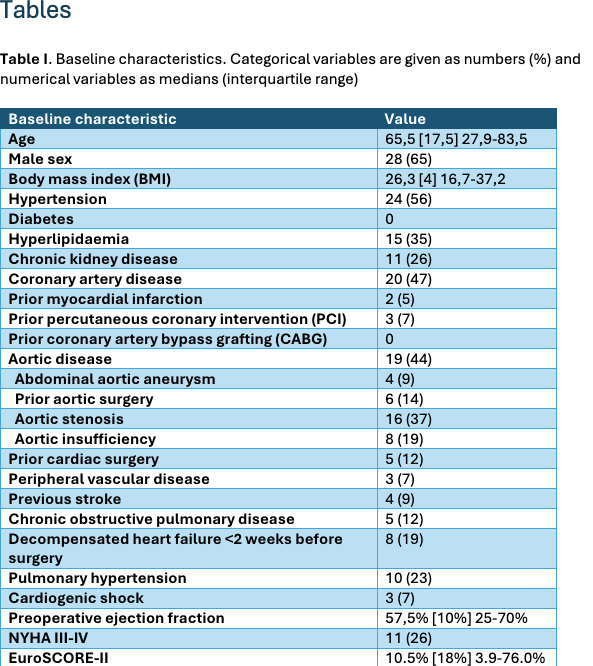
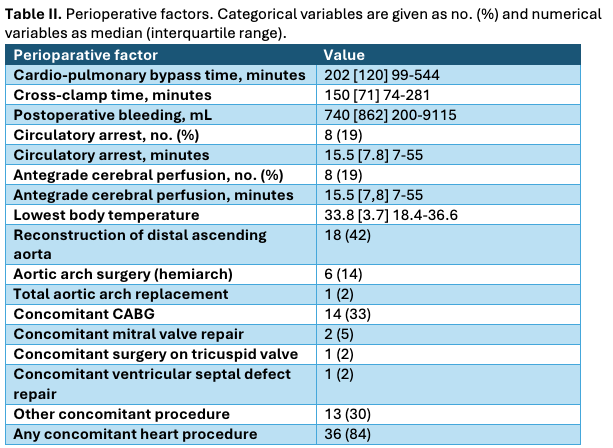
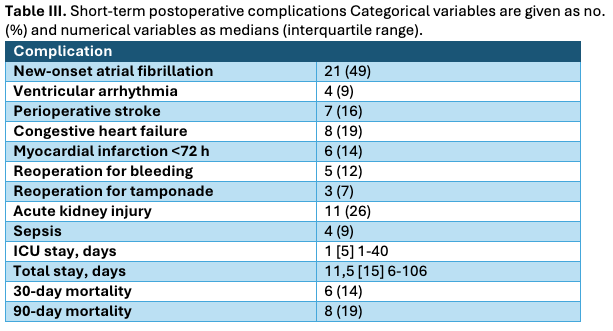
Results: A median of three cases was performed per year (range 0-5). The most common indication was dilated aortic root (70%), followed by Type-A aortic dissection (9%) and small aortic annulus during aortic valve replacement (9%). Average age was 62 years and 65% were male. Median EuroSCORE-II was 11% (range 3-71%), cardiopulmonary bypass time 234 min. and cross-clamp time 157 min. The most common postoperative complications were new-onset atrial fibrillation (51%) and perioperative myocardial infarction (14%). Postoperative length of stay was 12 days median and 30-day mortality 14% (n=6). At follow-up, 1- and 5-year survival rates were 81% and 74%, respectively. For patients surviving the first 30 days, 5-year survival was 86%, and at long-term follow-up only three patients (7%) had undergone reoperation.
Conclusions: Freestyle®-ARR is a technically challenging operation and is associated with high short-term mortality rates compared with regular AVR. However, long term survival was favourable, and reoperations were uncommon in those surviving to discharge.